Texture that delivers: Turning every bite into a memorable experience
The way a treat taste will always be important, however, today, how a product feels, breaks, melts, and surprises can be equally important. Texture is what transforms a product from good to unforgettable.
Texture = Experience, not just structure
Consumers are increasingly seeking multi-sensory food experiences, where texture plays a central role.
- 57% of consumers say engaging multiple senses boosts mood more than taste alone
- 36% of chocolate consumers are more likely to try products with mixed textures
- In ice cream, texture combinations are now a key driver of treat occasions
This shift is redefining indulgence.
It is no longer enough to be creamy or sweet. The expectation is layers, contrast, variation, and discovery in every bite.
This is where texture becomes a storytelling tool, not just a functional component.
From indulgence to premiumisation
Texture is also a powerful signal of quality and value.
- 28% of consumers link appealing texture directly to indulgence
- 79% of Chinese consumers associate dense ice cream with higher quality
Products that combine textures are perceived as more complex, more crafted, and more premium.
In other words, texture justifies the price point.
This is why texture-led innovation is increasingly used to elevate everyday formats into premium experiences.
The five textures shaping innovation
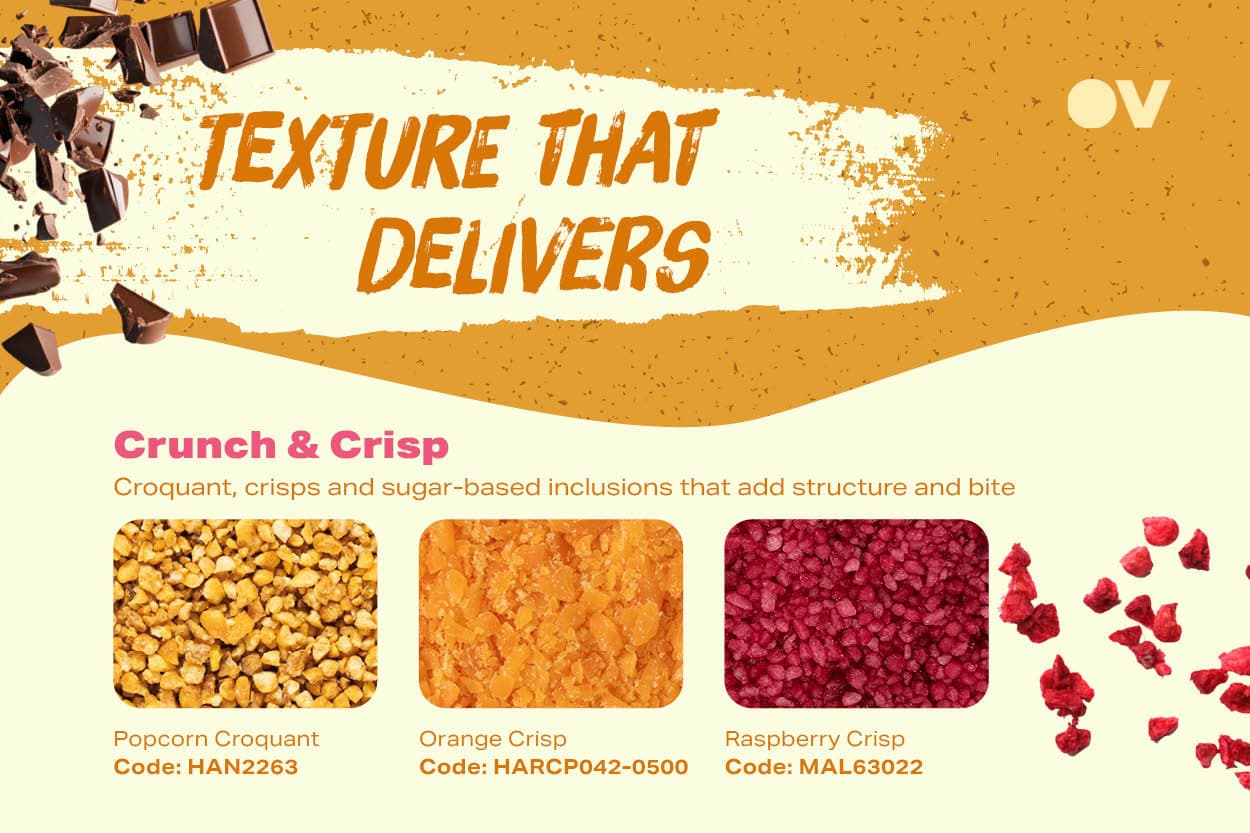
- Crunch and crisp – the hero of excitement
Crunch continues to dominate globally. It delivers instant impact, audible satisfaction, and strong visual appeal. Often the entry point to indulgence.
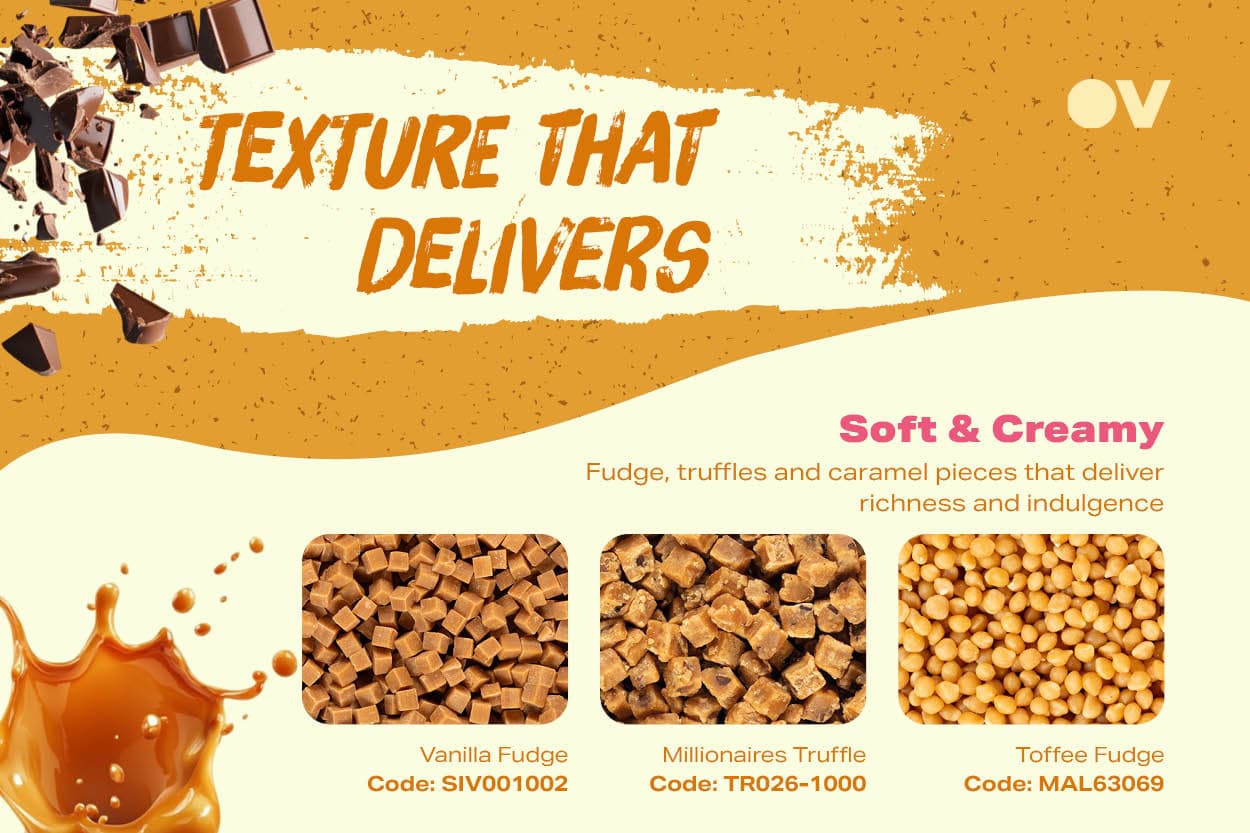
- Soft and creamy – the foundation of indulgence
Creamy and smooth textures provide comfort, richness, and a premium base. Today, they act as the canvas for contrast rather than standing alone.
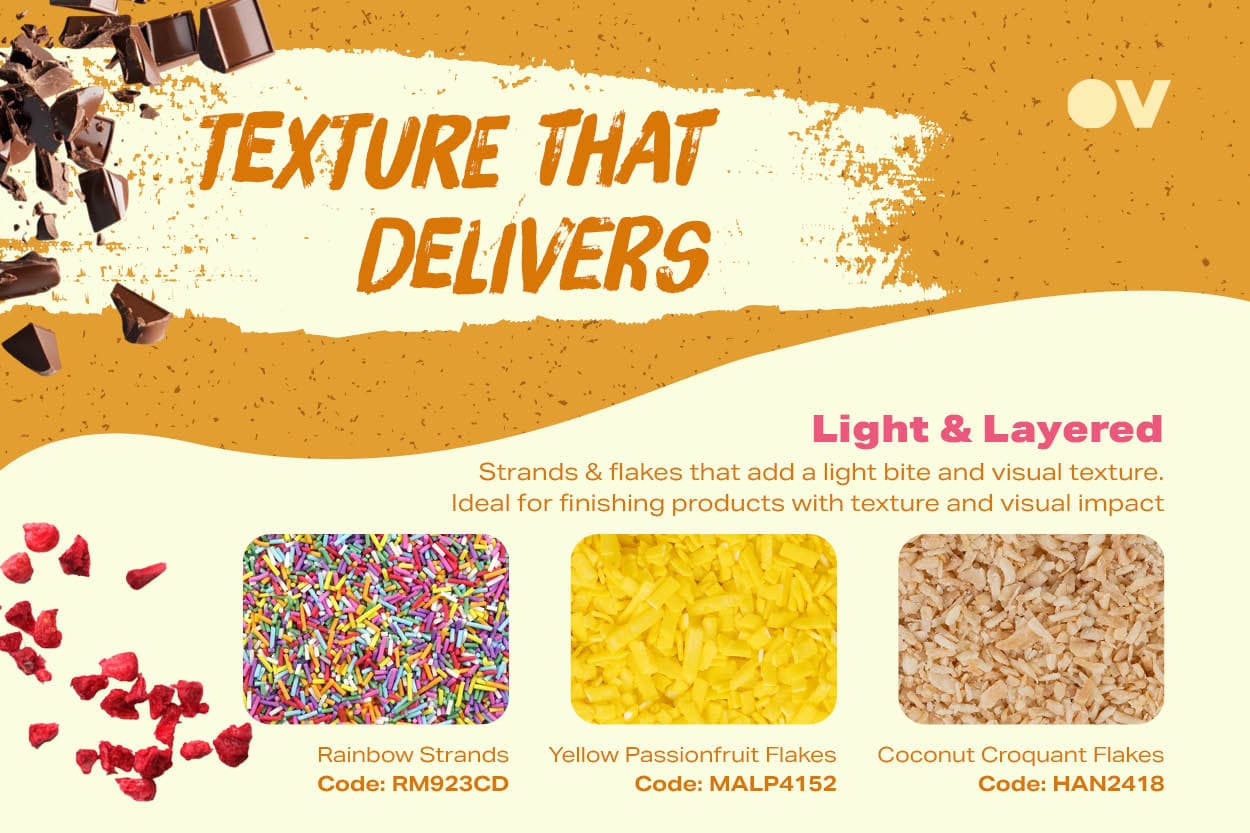
- Light and layered – subtle indulgence
Layered but light formats are gaining traction, especially in ice cream and bakery. Consumers associate visible inclusions with generosity and value.
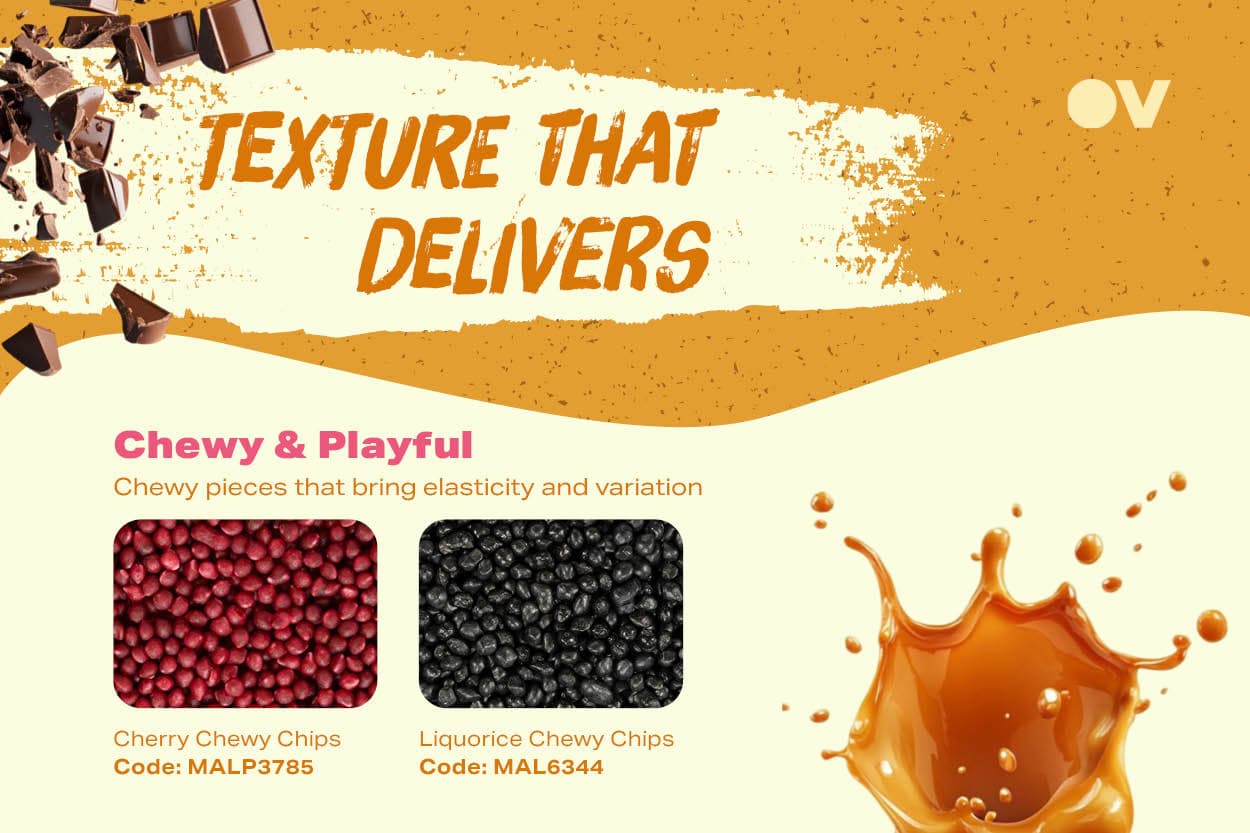
- Chewy and gooey – playful and surprising
Chewy and elastic textures bring playfulness, longer eating experiences, and unexpected mouthfeel. This is where products become more interactive and fun.
- Contrast and layering – the future of texture
The strongest trend is not one texture, but the combination of many. Crunchy with creamy. Chewy with crispy. Smooth with chunky. Texture is becoming architectural.
From product to social moment
Texture is also driving shareability.
Formats like freeze dried inclusions, layered desserts, and exaggerated crunch or stretch are gaining traction because they are visually engaging, unexpected, and satisfying to watch.
Texture is no longer just eaten. It is experienced and shared.
What this means for brands
To win in today’s market, texture needs to be designed, not added.
The opportunity lies in combining multiple textures in one product, creating contrast within a single bite, using texture to signal quality and indulgence, and making texture visible and communicable.
What this means for product development
For B2B manufacturers and brands, this translates into a clear direction.
Build products with intentional texture layering.
From crunch and crisp inclusions, soft and creamy components, chewy and playful elements, and light decorative finishes.
To multi-textural experiences that elevate the final product and drive innovation, indulgence and differentiation.
The brands that win will be those that move beyond single textures and start building complete sensory experiences.
Latest Insights

Get to Know OV: What Quality Means Across Our Group
Asian-Inspired Flavours: From Consumer Curiosity to Commercial Opportunity